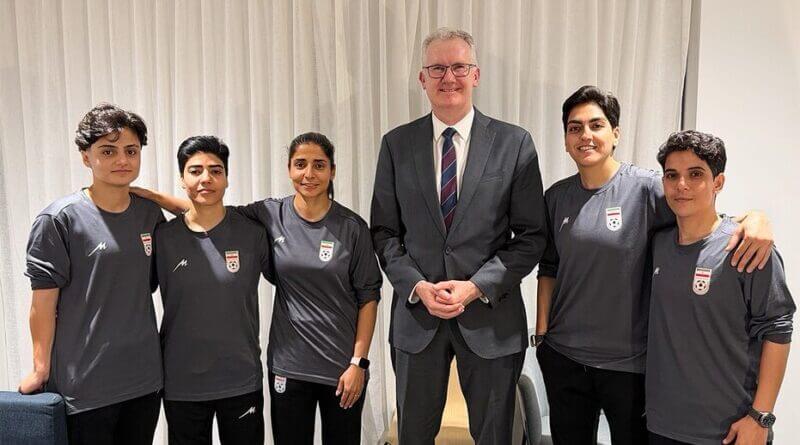
Five players from Iran’s women’s national soccer team have been granted asylum in Australia, according to Australian authorities. The remaining team members are still deciding whether to stay in Australia or return to Iran, which continues to face war and turmoil, a government official said Tuesday.
The Iranian team arrived in Australia for the Women’s Asian Cup before the outbreak of conflict following the U.S.-Israeli attacks on Iran on Feb. 28. The team’s official roster includes 26 players, along with coaches and staff. Australian Home Affairs Minister Tony Burke confirmed that five players were transported to a secure location overnight to finalize humanitarian visas. It remains unclear what the other team members will do.
Burke told reporters that the offer of asylum was extended to all team members. He said the five players who received asylum wanted to make their wishes public, emphasizing they are not political activists. Prime Minister Anthony Albanese added that Australians are moved by the women’s situation and that they are safe in the country.
The move comes after the team refused to sing Iran’s national anthem before their first match at the tournament, a gesture seen by some as protest and by others as mourning amid the conflict at home. The team later sang the anthem in subsequent matches, including their final game, after which they were eliminated.
Outside the team’s hotel on Australia’s Gold Coast, protesters gathered near a bus believed to be transporting the players. Demonstrators waved Iranian flags and chanted “Save our girls” before the bus left. The team’s head coach, Marziyeh Jafari, said Sunday the players want to return to Iran as soon as possible.
The situation drew international attention, with U.S. President Donald Trump calling on Australia to grant asylum to any team members who wanted to stay. Trump accused Australia of making a “terrible humanitarian mistake” by potentially sending the players back to Iran, where he said they could face danger. Albanese said Trump’s comments were discussed during a phone call, which he described as positive.
It remains uncertain when the remaining players and staff will leave Australia or if additional asylum requests will be made. The situation highlights the personal and political stakes for the athletes amid ongoing conflict in Iran.
Jon Ross Myers is the executive editor and publisher of the Mississippi News Network, Mississippi's largest digital only media company. He can be reached at editor@tippahnews.com