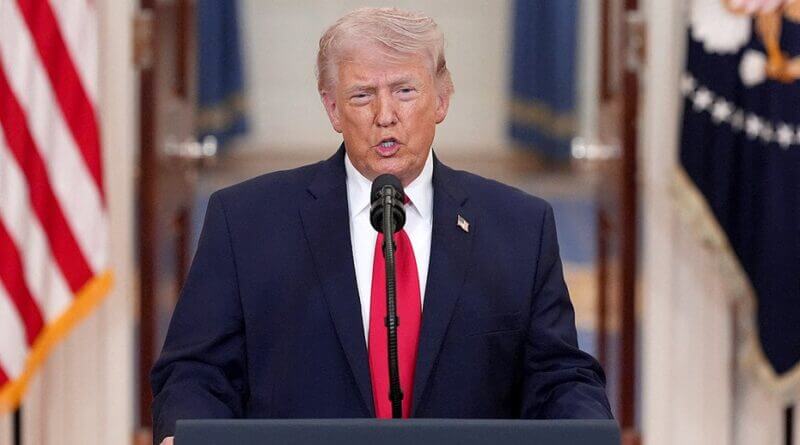
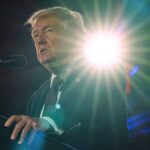
President Donald Trump’s prime-time speech on Iran was marked by contradictions and a lack of clarity, according to analysts and international leaders. The president opened with remarks about the Artemis moon mission and seized Venezuelan oil before shifting to a stern critique of Iran, calling it the world’s leading terror state.
Trump asserted that Iran could never be allowed to develop a nuclear weapon and claimed that the U.S. had decimated Iran’s military. Yet, he also announced plans to intensify bombing over the next two to three weeks, targeting Tehran’s energy facilities. This contradiction left many questioning the purpose of the ongoing strikes, especially since Trump proclaimed victory earlier in the speech.
Throughout the address, Trump repeatedly said the war’s goal was not regime change. However, the day after the initial attack, he suggested that leadership in Iran, including the Ayatollah, had been targeted and killed. Iran’s parliament speaker, Mohammad Ghalibaf, responded with a fiery message, warning that Iranians are prepared to defend their homeland with force.
Trump also indicated that Iran’s blockade of the Strait of Hormuz was no longer a concern, claiming the strait would open naturally. He criticized European allies for their lack of action and dismissed the importance of the strait in future oil traffic. Meanwhile, Iran reported the destruction of a Tehran research facility, marking the first reported strike since the speech.
A CNN poll conducted before the address found that 66% of Americans disapprove of U.S. actions against Iran, a slight increase from previous weeks. Analysts and European leaders criticized the speech for lacking new information and clarity. France’s President Emmanuel Macron and others expressed concern over the unpredictable U.S. approach and the risk of escalation.
The aftermath of the speech saw media focus shift to President Trump’s recent firing of Attorney General Pam Bondi and ongoing political battles. While the president’s rhetoric may shift, experts warn that the economic and geopolitical impacts of the ongoing conflict could persist long after the bombs stop falling.
Jon Ross Myers is the executive editor and publisher of the Mississippi News Network, Mississippi's largest digital only media company. He can be reached at editor@tippahnews.com