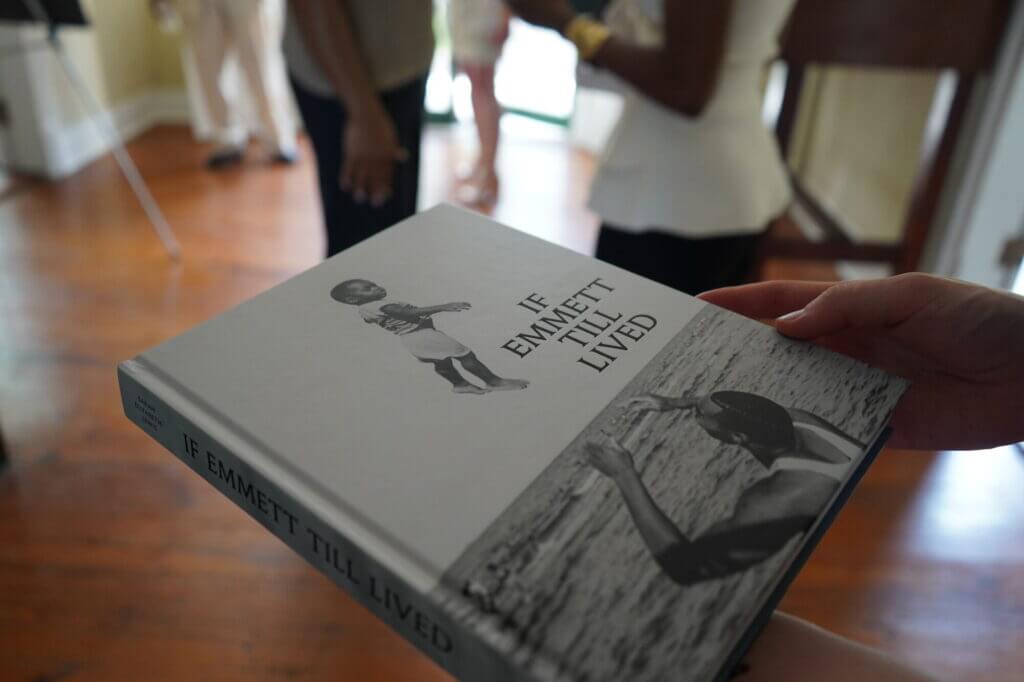
Carrollton, Miss. — Best-selling author Sarah Lewis has released a new book titled “If Emmett Till Lived,” which imagines the life Till might have led had he survived his 1955 lynching. The collection features essays and photographs aimed at illustrating the possibilities of Till’s life and legacy, timed to coincide with what would have been his 85th birthday, according to Lewis.
Emmett Till, 14, was brutally murdered in Mississippi in 1955. His funeral drew up to 100,000 people at Roberts Temple Church of God in Christ in Chicago, where his mother, Mamie Till-Mobley, made the decision to leave her son’s casket open. Photographs of Till’s battered body appeared worldwide, prompting a national reckoning with racial injustice. Lewis noted that Till’s mother understood the importance of witnessing and images in advancing the Civil Rights Movement.
Less than a month after Till’s death, an all-white jury acquitted his killers, Roy Bryant and J.W. Milam. The men later boasted about the murder in Look magazine for cash. The injustice helped galvanize the Civil Rights Movement, inspiring figures like Rosa Parks, who later said she thought of Till when refusing to give up her bus seat in Montgomery, Alabama. Lewis said the story of Till continues to resonate, especially with younger generations dubbed “the Till generation.”
Lewis, an art and cultural historian and Harvard University professor, visited the site where Till’s body was recovered and reflected on how different the country might be if society fully recognized Till’s humanity. In her book, she included around 180 photographs by renowned photographers such as Gordon Parks and Henri Cartier-Bresson. Lewis said she prayed to Till for guidance in choosing the images, which she described as inspired by divine insight.
The book features essays from notable figures including Smithsonian Secretary Lonnie G. Bunch III, Howard University Civil Rights scholar Sherrilyn Ifill, and filmmaker Ava DuVernay. An exhibition of the photographs opens Sept. 10 at the Museum of Contemporary Photography, coinciding with the book’s release. Lewis emphasized that Till’s life continues to grow as a symbol of justice and resistance. Despite acts of violence against memorial markers, Lewis said these acts underscore the importance of monuments in honoring Till’s legacy.
Jon Ross Myers is the executive editor and publisher of the Mississippi News Network, Mississippi's largest digital only media company. He can be reached at editor@tippahnews.com