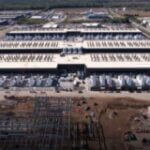
Advocates Call for Light Pollution Regulations Amid Data Center Expansion
As the number of data centers in the United States continues to increase, some environmental advocates are calling for regulations to reduce light pollution. Vayujeet Gokhale, a physics professor at Truman State University and a board member for DarkSky Missouri, emphasized the importance of responsible outdoor lighting at these facilities.
Gokhale said data centers can minimize their environmental impact by installing downward-facing lights, using motion detectors, and choosing warm-colored lights. He argued these measures could reduce pollution without compromising the operation of the data centers, which do not require bright lighting for their core functions.
He advocates for adopting principles of responsible outdoor lighting across the industry, which he believes could also lower operational costs. Gokhale noted that unlike other environmental issues, light pollution offers an easy solution that benefits both the environment and industry safety.
The expansion of data centers is notable in Missouri, where 95 facilities are active, and new projects like Google’s $15 billion investment in Montgomery County are underway. The growth is driven by the rising demand for artificial intelligence and digital storage, with most new facilities planned for the South and Midwest, according to Pew Research Center data.
Advocates highlight that reducing light pollution could help protect nocturnal pollinators and migratory birds. Nicole Flowers-Kimmerle, a horticulture educator, explained that artificial lighting disrupts nocturnal insects and affects the food web, including bird species that rely on these pollinators. Murry Burgess, an ornithologist at Mississippi State University, added that artificial lights interfere with migratory birds’ star navigation, increasing their risk of injury and mortality.
Local communities in the Mississippi River Basin are divided over data center development. Warrenton, Missouri, approved a large-scale project, while others like St. Charles County have imposed moratoriums or recalled officials over such projects. State legislation aimed at regulating data centers has faced obstacles, with proposals to manage electricity use and water consumption not advancing through the legislature.
Gokhale expressed concern that, without proper regulation, the proliferation of data centers could strain land and water resources. He called for policymakers to define and categorize data centers clearly, emphasizing that responsible policies are essential as the industry expands nationwide.
This story is a product of the Mississippi River Basin Ag & Water Desk, an independent reporting project based at the University of Missouri, with support from Report for America and the Walton Family Foundation.
Source: Original Article