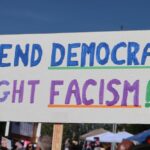
The Mississippi Legislature held its first public hearing on redistricting Tuesday night in Itawamba County, sparking intense comments from speakers about race and politics. The hearing was part of the Legislature’s effort to redraw legislative, congressional, and judicial districts after the U.S. Supreme Court’s ruling in Callais v. Louisiana, which declared racial gerrymandering unconstitutional under the Voting Rights Act, according to officials.
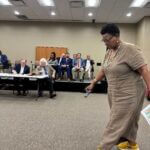
State Senator Dean Kirby, chairman of the Joint Committee on Redistricting and Reapportionment, opened the session by clarifying that the focus was on state House, Senate, congressional, and judicial districts, not municipal or county boundaries. He emphasized that the purpose was to listen, not debate or answer questions, as maps and population data were displayed for public review.
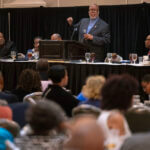
Rev. Jeffery Gladney, pastor of Johnson Chapel Missionary Baptist Church, criticized the redistricting effort, claiming it aims to eliminate Black districts. He argued that redistricting threatens Black voices and communities, warning that splitting neighborhoods could reduce resources and influence. Gladney specifically referenced Congressman Bennie Thompson (D), suggesting that redistricting could diminish his ability to serve his district, which he called a champion for democracy.
Governor Tate Reeves (R) has publicly supported redrawing the 2nd Congressional District following the Supreme Court ruling, with Reeves stating in May that Thompson’s “reign of terror” over the district is ending. Thompson responded angrily, comparing the ruling to a second Civil War during an interview with Al Sharpton.
Rev. Dr. Robert James, president of the Mississippi NAACP, questioned whether Mississippi would continue to follow old patterns of exclusion or embrace diversity. He emphasized that fair representation should avoid partisanship, although a 2019 Supreme Court decision in Rucho v. Common Cause affirms that partisan considerations are a political question beyond federal court review. Many speakers, mostly aligned with Democrats, voiced concerns about racial representation, with some labeling the process as “racism” and “fascism” and criticizing political figures, including President Donald Trump.
The series of hearings will continue at various locations across the state this fall, with all sessions beginning at 6 p.m. They will be live-streamed on the Mississippi Legislature’s YouTube channel.
Jon Ross Myers is the executive editor and publisher of the Mississippi News Network, Mississippi's largest digital only media company. He can be reached at editor@tippahnews.com