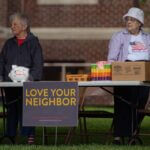
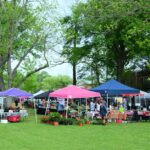
On one block of Jackson children spun in severely cute Halloween costumes, a reminder that ritual and delight still anchor our neighborhoods. Small celebrations like a neighborhood fair are not incidental; they are the ordinary practices that bind us together when the news brings harder things.
Harder things came in the same news cycle: federal officials are investigating arson at the Senatobia Police Department, and hundreds marched from Biloxi to Ocean Springs calling for justice for Nolan Wells. Both stories press on the same raw nerve of communal life — the need for safety, the ache of loss, and the demand that systems answer to the common good.
At the same time, public life bears other strains: reporting shows some Republicans trying to center transgender issues in the midterm campaign, a former president told a Tupelo crowd that Scott Colom will put Mississippi, not MAGA, first, and federal engagement with local policing and funding remains fraught — the Trump Department of Justice is seeking to give the Jackson Police Department millions with strings attached, while Jackson State employees face layoffs amid restrictions on federal funding.
These items are not merely political headlines for those who follow the news; they are pastoral realities. They shape whether kids can play safely, whether grieving families feel heard, whether teachers and staff can keep their jobs, and whether public trust is strengthened or strained. The vocation of the church in such moments is not to adopt a partisan air but to practice faithful neighbourliness: lament with the grieving, protect the vulnerable, and insist on truth and accountability.
Scripture gives us resources for this middle path — a call to justice and mercy paired with humility and care for creation. That instinct shows up in other local reporting, too, as writers ask, Where have the whip-poor-wills gone? — a quieter summons to stewardship and attention to the nonhuman neighbors who share our place. Public faith without attention to the health of creation and community is incomplete.
Practically, congregations can hold space for the wide range of needs these stories surface. Host listening sessions for those grieving or fearful; partner with civic groups that seek transparent investigations and fair processes; offer material support to employees facing layoffs; and cultivate the simple joys — communal festivals, safe streets, and care for local habitats — that sustain civic life.
We are a people called to both lament and hope. This week’s contrasts — from Halloween laughter to arson investigations, from marches for justice to debates at the ballot box — remind us that faithfulness is quiet work: showing up, insisting on justice, tending the small delights, and refusing to let our public life be emptied of mercy. In a time of many pressures, the church’s task is to be both a sanctuary and a civic conscience.
Jon Ross Myers is the executive editor and publisher of the Mississippi News Network, Mississippi's largest digital only media company. He can be reached at editor@tippahnews.com