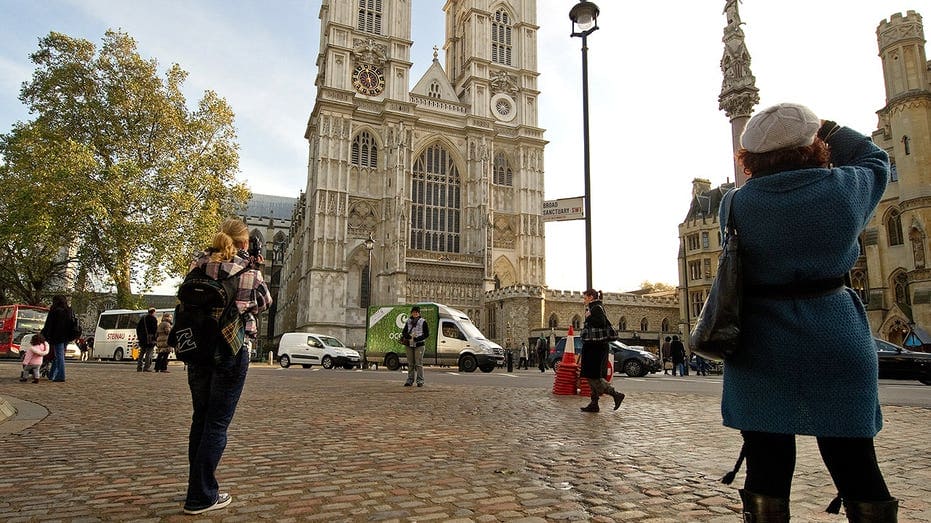
A study led by Warwick Rodwell concludes the unidentified skeleton found at Westminster Abbey in 1869 likely belonged to an 11th‑century monk rather than the 4th‑century Roman named on the sarcophagus, Fox News reported, citing SWNS and the Journal of the British Archaeological Association.
The skeleton was discovered inside a Roman limestone sarcophagus inscribed for Valerius Amandinus. Archaeologists in 1869 noted an early medieval Latin cross sculpted on the lid, a mismatch that puzzled experts for more than 150 years, Fox News reported.
Rodwell’s study followed a 2025 excavation of the Abbey’s vestry required before construction of the new King Charles III Sacristy, scheduled to open in 2027, the report said.
Carbon dating placed the bones between 987 and 1052 A.D., which the study says fits two high‑ranking medieval candidates: Aelfwig, who died about 1020, and his successor Wulnoth, who died in 1049. “We do not know the date of birth of either,” Rodwell said, as SWNS noted. “But either would fit equally well if we assume the Abbot was in his early twenties when the appointment was made and close to 50 when he died.”
The study reports the man was likely between 35 and 49 years old at death and about 5 feet, 9 inches tall. Researchers found white lime residue inside the stone casket outlining where a wooden coffin had once rested, suggesting the reuse of the Roman sarcophagus.
The sarcophagus is on display at Westminster Abbey in the Queen’s Diamond Jubilee Galleries, Fox News reported. The article also noted other recent medieval skeletal discoveries in England, including 317 skeletons uncovered in 2025 at a University of Gloucestershire site and 20 remains found in spring 2025 at the Tower of London.
Jon Ross Myers is the executive editor and publisher of the Mississippi News Network, Mississippi's largest digital only media company. He can be reached at editor@tippahnews.com