ACA enrollment plummets in many states after subsidy expiration, federal data shows
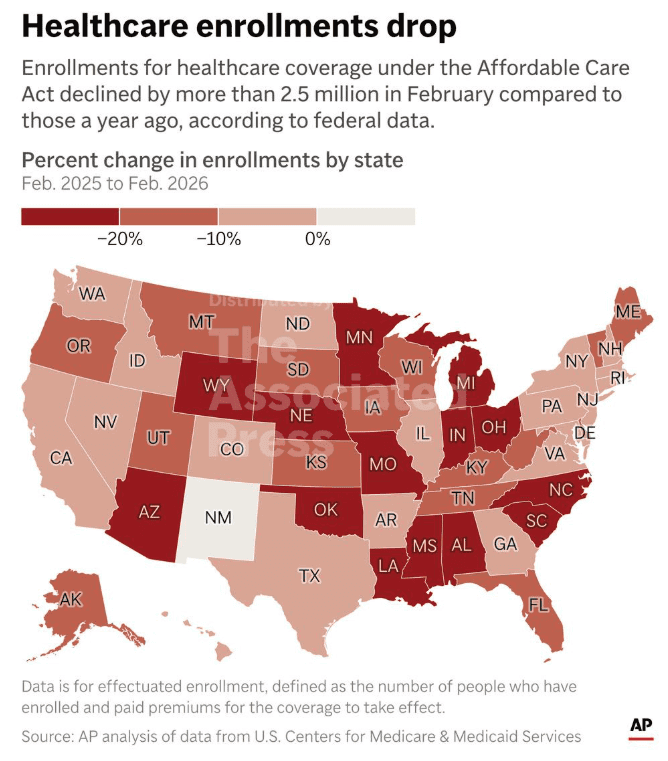
States across the country saw significant decreases in Obamacare enrollment over the past year, according to new federal data. Ohio and Oklahoma each lost more than 32% of their enrollees, the data shows. Several other states, including Arizona, South Carolina, Minnesota, Indiana, Michigan, Mississippi, Louisiana, and Missouri, each saw declines of more than 25%, the first comprehensive 50-state breakdown following the expiration of enhanced subsidies in January.
The data, posted in late June by the Trump administration and first reported by The Associated Press, indicates around 2.6 million fewer Americans had Obamacare plans in February compared to the same period last year. It accounts for new sign-ups, automatic renewals, and payments made to maintain coverage, according to Cynthia Cox, vice president and director of the ACA program at the Kaiser Family Foundation.
Cox noted that this dataset provides the most detailed look yet at how much ACA marketplace enrollment has fallen at the state level. Experts say the declines largely stem from the end of federal subsidies, which caused monthly premiums to double or triple for many consumers, leading some to drop coverage altogether. The Department of Health and Human Services suggested that a crackdown on fraudulent enrollments might also have contributed to the decline, though analysts believe affordability was the primary factor.
Mike Rhoads, deputy commissioner of life and health at the Oklahoma Insurance Department, said the main issue in his state was cost. “It’s all about affordability at this point,” he said. Rhoads expects the trend to continue, with insurer rate hikes projected for next year.
Ohio and Oklahoma experienced the greatest enrollment drops, each losing more than a third of their populations. Other states, such as Arizona, South Carolina, and Minnesota, each lost more than 25%. Florida, which relies heavily on ACA coverage and did not expand Medicaid, remains the state with the most marketplace enrollees—nearly 4 million—but also saw approximately 443,000 residents drop coverage this year. Many of these individuals may have found coverage through other sources, but most likely went without insurance, Cox said.
Interestingly, some states that expanded their markets during the pandemic now face significant enrollment declines. Cox noted that these states likely had large numbers of enrollees who signed up due to the affordability of enhanced subsidies. Only one state, New Mexico, saw an increase in enrollment—about 14%—after fully replacing federal subsidies with state funds.
States operating their own marketplaces generally experienced smaller losses than federal marketplace states. New Mexico’s efforts to offset costs with state funds exemplify how some states have mitigated the impact of subsidy expiration. Tim Fowler of the New Mexico Health Care Authority attributed the increase to a healthcare affordability fund that replaced the federal subsidies, emphasizing that health insurance should protect people from medical debt, not cause it.
Source: Original Article