Mississippi higher education officials address enrollment trends, campus planning
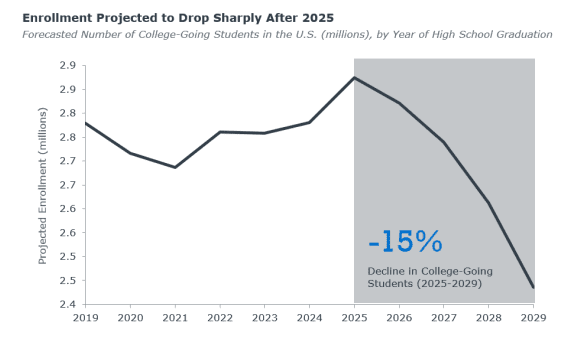
Mississippi’s public colleges and universities are not yet feeling the full impact of the predicted enrollment decline, but officials say the state faces significant demographic challenges ahead. A 2025 report from the Mississippi Institutions of Higher Learning projects the state will see the second-largest drop in high school graduates nationwide from 2023 to 2041.
The decline is attributed in part to falling birth rates. Data from the Centers for Disease Control and Prevention shows Mississippi’s birth rate dropped from 68.7 per 1,000 women aged 15 to 44 in 2005 to 57.3 in 2024, according to the Mississippi Department of Education. Education leaders say fewer births translate into fewer high school graduates and, eventually, fewer college prospects.
Nationally, college enrollment among 18- to 24-year-olds declined from 41% to 39% between 2012 and 2022, according to the National Center for Education Statistics. The IHL report forecasts that by 2050, the U.S. population will grow older while the number of young people shrinks, with Mississippi expected to experience up to a 26% decline in high school graduates by 2041.
Despite these projections, current enrollment figures show resilience. Kell Smith, executive director of the Mississippi Community College Board, said overall enrollment has increased over the past two years. He noted that community colleges serve a mix of traditional and non-traditional students, including those seeking retraining or additional skills to meet workforce demands.
Universities across Mississippi are also experiencing growth. Of the state’s eight public universities, only Alcorn State University saw a decline—3.2%—during fall 2025. Overall, enrollment increased by about 2.7%, according to the IHL report. Education officials attribute the growth to targeted marketing, online course expansion, and efforts to attract out-of-state students.
To address housing needs, the IHL board approved a partnership to build over 1,200 new beds at the University of Mississippi. Community colleges are tailoring housing solutions locally, based on individual campus needs. Discussions about consolidating campuses or closing underperforming institutions have so far remained inactive, with officials emphasizing the importance of maintaining the current system.
Workforce development remains a priority. Construction, welding, and nursing are among the sectors experiencing high demand. Smith highlighted the importance of community colleges in helping those without a high school diploma upskill and find employment, especially as Mississippi seeks to meet increasing industrial and infrastructure investments.
Officials say collaboration with economic development groups like AccelerateMS helps align academic programs with labor market needs. University programs are regularly updated to reflect changing workforce demands, with new degrees introduced based on labor data and salary projections.
Source: Original Article