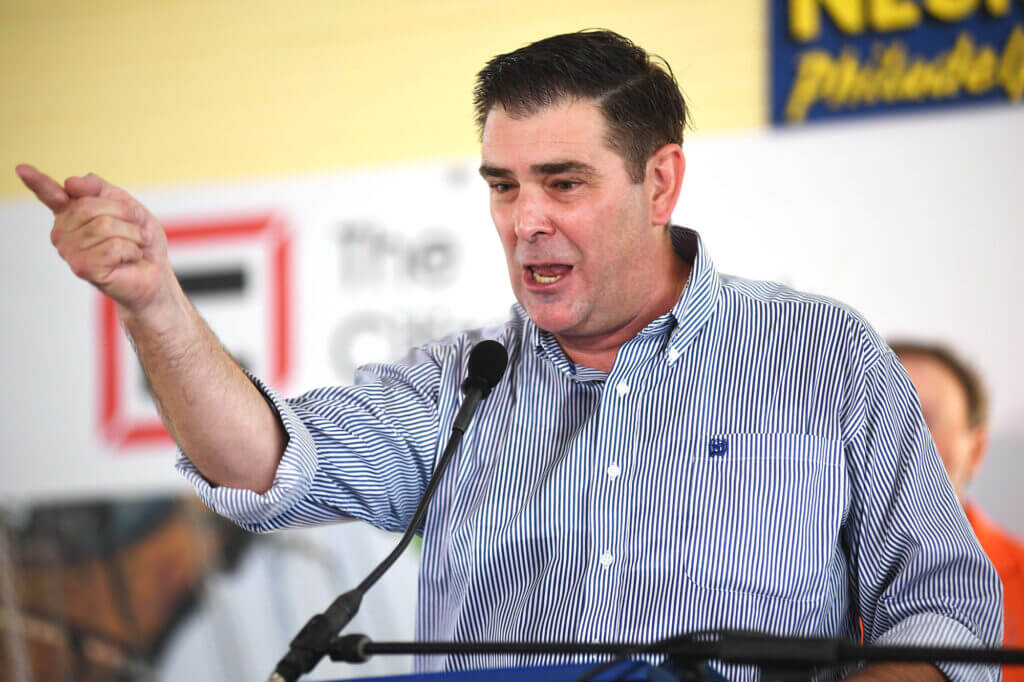
Mississippi Agriculture Commissioner Andy Gipson, a Republican and gubernatorial candidate, recently released a compact disc titled “God Bless America,” which features his rendition of Woody Guthrie’s iconic song “This Land Is Your Land.” Gipson, also a part-time country singer and Baptist minister, has faced scrutiny over his recent comments about Muslim Americans.
Gipson’s decision to include Guthrie’s song came amid social media outrage over the appointment of Assama Ali, an American citizen, Muslim, and lawyer, as a municipal judge in Benoit, Mississippi. Gipson publicly weighed in on the topic multiple times, without mentioning Ali by name, and called for a ban on Sharia law—a move he said was necessary despite no indication that it was being enacted in Mississippi.
Gipson did not acknowledge that Ali is a graduate of Mississippi College School of Law and a licensed attorney who must uphold state laws as a judge. Instead, he posted on social media, “If you are among those who think Sharia law is not an issue in Mississippi, you’d better think again,” and pointed to the existence of a Muslim cultural center in Jackson. Gipson pledged to defend “our Constitution and our Christian values,” a statement that has drawn criticism over his apparent exclusion of Muslim rights.
The controversy raises questions about whether Gipson’s lyrics in Guthrie’s song reflect true inclusivity. Guthrie’s “This Land Is Your Land” was originally written as a critique of Irving Berlin’s “God Bless America,” highlighting the disparities and suffering during the Great Depression. The song’s lyrics, especially the “lost verses,” depict the hardships faced by marginalized groups and the inequality in America.
Gipson’s version omitted these verses, as did Guthrie’s during World War II, possibly to avoid criticism during wartime. Notably, Gipson also chose not to include the song’s final verse, which speaks of “walking that freedom highway,” a phrase associated with the 1965 Selma to Montgomery march for voting rights. Critics argue that his performance and social media statements raise questions about his understanding of the song’s inclusive message.
Jon Ross Myers is the executive editor and publisher of the Mississippi News Network, Mississippi's largest digital only media company. He can be reached at editor@tippahnews.com