Mississippi health officer says state prepared despite drop in national emergency readiness ranking
Mississippi was placed in the low-performance tier in Trust for America’s Health’s Ready or Not 2026 report, but State Health Officer Dr. Daniel Edney said the state’s preparedness systems remain strong and the drop reflects changes in scoring and reporting rather than a decline in readiness.
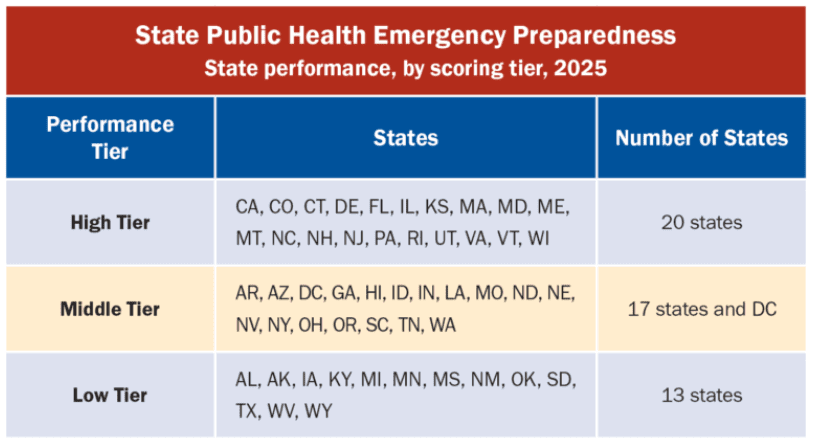
The Ready or Not 2026 report evaluated 2025 readiness across 10 indicators, including workforce mobility, public health funding, laboratory surge planning and water system safety, and placed 20 states in a high tier, 17 states and the District of Columbia in a middle tier and 13 states in a low tier, Trust for America’s Health said. Edney said Mississippi had regularly ranked near the top in earlier editions and that his team met with the report’s authors to examine new scorecards and reporting issues.
The report flagged low flu vaccination rates as a national concern and showed Mississippi’s flu vaccination rate for residents 6 months and older at 29.7%, compared with a 2024-25 national average of 50.2%, Trust for America’s Health said. Edney said the state’s vaccination rates for flu and pneumonia are lower than he would like, and he noted one pediatric flu-related death this season and 110 flu-related deaths across all ages recorded by the Mississippi Department of Health last year.
Edney said childhood vaccination rates remain a strength overall, with a statewide average of 97.5%, but he warned that religious exemptions have left five or six counties below the 95% threshold that helps prevent measles outbreaks. He cited George County at 91.8% and Pontotoc and Lincoln counties at about 93% and said the health department is contacting school superintendents in affected counties to ensure outbreak plans are in place.
The report also raised concerns about hantavirus and the potential for Ebola, noting the Centers for Disease Control and Prevention had observed 18 Americans after a cruise-ship exposure to an Andes strain of hantavirus and said none were symptomatic. Edney said Ebola would be a major concern if an infected person entered a community undetected. He also cited shortages in emergency medical personnel — saying Mississippi has about half the paramedics and EMTs it needs — and described state efforts, including the Rural Health Transformation Program and plans by Gov. Tate Reeves to use grant funds, to shore up the workforce. Edney said federal funding cuts tied to the 2025 law known as the One Big Beautiful Bill have reduced some support but that Mississippi, which did not expand Medicaid, has increased state Medicaid funding by 16% and remains “stable” as it monitors federal grant levels.
Source: Original Article