Mississippi has made progress in reducing errors in its food assistance program, according to data from the Mississippi Department of Human Services. The state’s most recent figures show an error rate of 9.43% for fiscal year 2026, below the 10.69% rate for 2024.
Despite the improvement, Mississippi is still liable for at least $80 million in federal penalties to continue running the Supplemental Nutrition Assistance Program. That amount could rise to $120 million if the state distributes too much or too little benefits to enrollees, based on error rates and federal law changes, officials said.
The federal government shifted the program’s costs to states under the so-called One Big Beautiful Bill, signed into law last summer. States are now responsible for penalties tied to their error rates, which measure how accurately they determine SNAP benefits. Experts warn this metric does not fully assess program success and may incentivize states to deny eligible recipients to avoid penalties.
Joseph Llobrera, senior director of research at the Center on Budget and Policy Priorities, said the law emphasizes payment accuracy at the expense of accessibility. “It has put all the emphasis on that payment error measure and lowering those error rates, without guards against making access worse for people who need that food assistance,” he said.
Mississippi remains one of the most food-insecure states, with nearly 20% of residents experiencing hunger, according to Feeding America. The state’s error rate of 10.69% in 2024 placed it among 21 states facing a 15% share of SNAP costs due to error penalties. However, unpublished data suggests Mississippi’s error rate improved to below 10% early in 2026, potentially reducing its penalty to $80 million.
Mississippi officials attributed the decline to increased staff training and efforts to remind recipients to update income information. Governor Tate Reeves, a Republican, praised the progress during a May interview, attributing it to his decision to switch from simplified reporting to a more complex change reporting system, which he said helped combat fraud.
Reeves said the new system requires recipients to report income changes within 10 days, whereas simplified reporting allows longer intervals between updates. Critics argue that Mississippi’s system generates excessive paperwork and that lawmakers attempted to adopt a simplified reporting measure this year, but it ultimately failed.
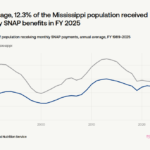
Experts note that SNAP fraud remains rare and that the program has rigorous eligibility checks. Meanwhile, nationwide enrollment has declined since 2024, with Mississippi experiencing a sharper drop of over 8% after federal law changes took effect in July, according to the Southern Poverty Law Center.
Theresa Lau, senior policy counsel at the center, warned that new federal requirements and penalties could further reduce access to benefits. She said increased paperwork and costs may force families to choose between food and other essentials, impacting vulnerable populations across the state.
Jon Ross Myers is the executive editor and publisher of the Mississippi News Network, Mississippi's largest digital only media company. He can be reached at editor@tippahnews.com