Mississippi lab helps Connecticut conduct first black bear survey in decade
Connecticut officials and researchers from Mississippi State University have launched the first scientific survey of the state’s black bear population in more than a decade, using DNA from hair samples to estimate how many bears live in western Connecticut, state and university officials said.
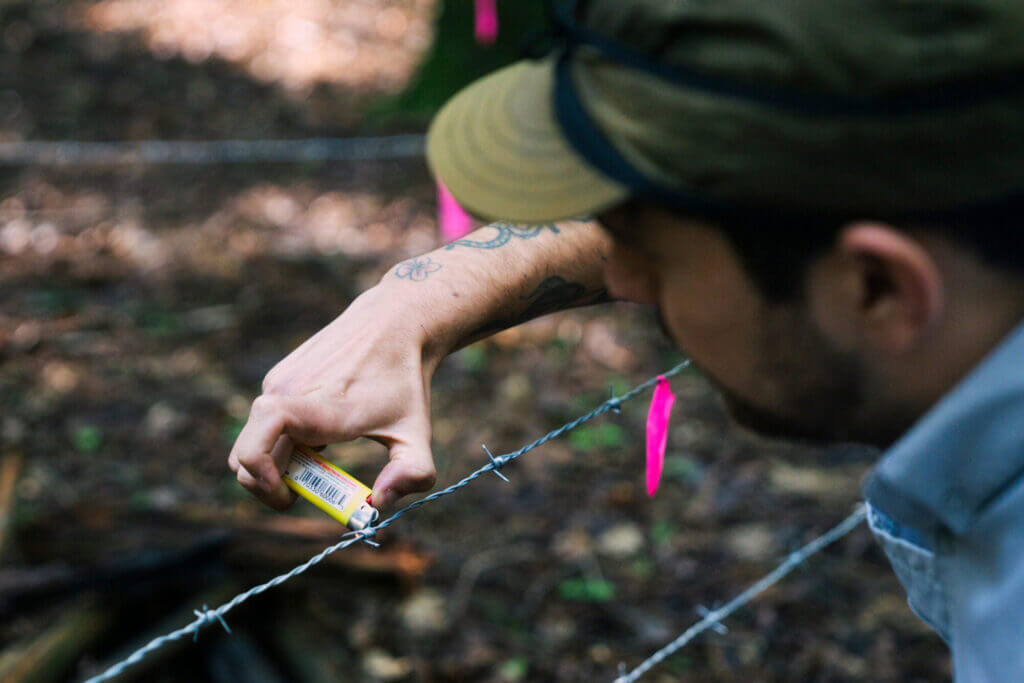
The 10-person field team has set up about 340 barbed-wire collection sites from the New York border to the Connecticut River and checks them weekly, according to Connor Kurz, project manager at the Carnivore and Population Ecology Lab at Mississippi State. The traps use nonfood lures — a small pile of sticks sprayed with used doughnut grease and a tampon soaked in raspberry extract — to attract curious bears without habituating them to human food, Kurz said.
Researchers bag and document any hair they find and send it to Dana Morin’s lab at Mississippi State for genetic testing, Morin said. As of the first week of August the team had collected about 850 hair samples, and field work is scheduled to conclude later this month, Kurz said. Morin said she will use spatial capture-recapture models to estimate abundance and that the lab expects to finish genetic testing and produce a final population estimate by next spring.
The last scientific study, conducted by the University of Connecticut in 2013-14 and published in 2016, genetically identified 235 distinct bears and estimated 400 to 450 bears in western Connecticut, the report said. The Department of Energy and Environmental Protection estimates the state’s total black bear population has since grown to about 1,000 to 1,200 animals, DEEP spokesman Bill Flood said.
DEEP records thousands of human-bear confrontations each year, including more than 250 instances of bears breaking into homes over the last six years, the agency said. This week the agency published an advisory saying more than 50 home entries had already been reported in 2026, more than in all of last year, DEEP said. Lawmakers have proposed a regulated hunting season in parts of the state, but opponents say hunting would do little to address problem bears that live close to neighborhoods, the release said. Flood said the survey, funded with $400,000 to $500,000 in federal wildlife grants, will help guide conservation and conflict-mitigation strategies. Field technician Ben Woxman said the team also logs incidental sightings; he led the group with 30 sightings as of early August and has observed other regional wildlife while working the project.
Source: Original Article