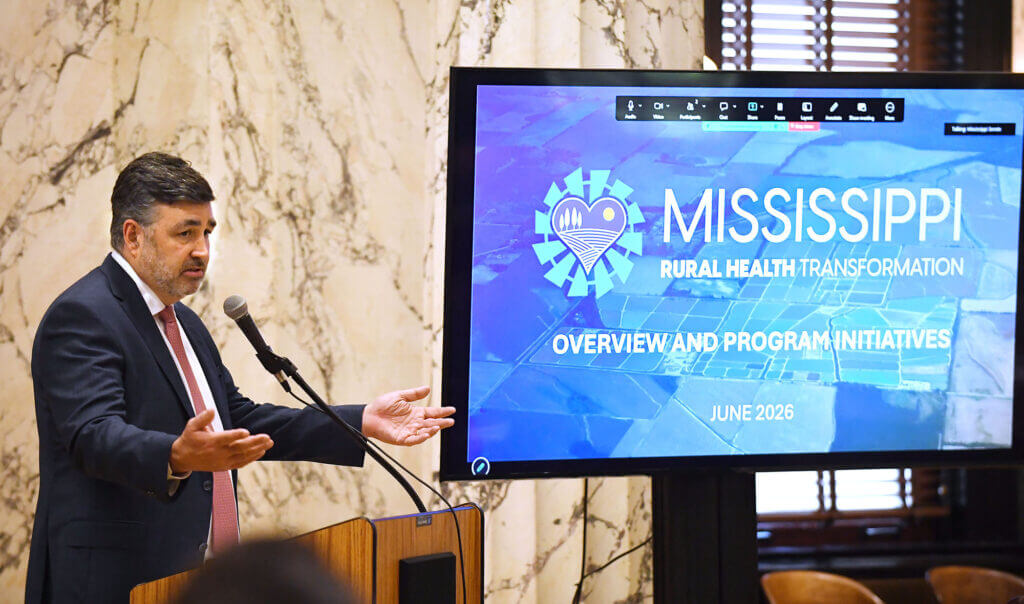
Mississippi’s plan to distribute $206 million in the first year of the federal Rural Health Transformation Program was developed after a brief online survey and a series of closed-door briefings, raising questions about public engagement, Mississippi Today reported and Richard Grimes, director of the Rural Health Transformation Program Office, said at a June 4 legislative hearing.
The Mississippi Division of Medicaid launched the survey on July 31 and closed it Aug. 14, yielding 122 responses by the deadline and a total of 145 by the end of October, Mississippi Today reported. Jamila McLean, director of health equity for Princeton University’s State Health and Value Strategies Program, told Mississippi Today the timeline was compressed by a federal application deadline that required states to submit proposals by Nov. 5.
Mississippi’s responses, excluding duplicates and blank entries, came from 19 states and the District of Columbia, with nearly 80% from Mississippi and representation from 39 counties, Mississippi Today reported. More than half of the in-state responses came from Lee, Hinds, Madison, Forrest and Sunflower counties, prompting criticism from Senate Public Health Chairman Hob Bryan, who told Mississippi Today that many rural residents had no meaningful opportunity to weigh in.
About one-third of survey replies came from hospital administrators and staff, including more than 20 from Tupelo-based North Mississippi Health Services, Mississippi Today reported. Respondents cited workforce shortages, long travel distances for patients, lack of insurance, strained ambulance systems and concerns about future Medicaid payment cuts. Private companies comprised about one-fifth of responses, and the survey also drew clinics, long-term care providers, professional groups and three elected officials, including House Public Health Chairman Sam Creekmore, who told Mississippi Today he believed lawmakers should have been more involved in the process.
Jon Ross Myers is the executive editor and publisher of the Mississippi News Network, Mississippi's largest digital only media company. He can be reached at editor@tippahnews.com