Mississippi Approves Opioid Settlement Funds for Multiple Projects
The Mississippi Attorney General’s office has posted a memorandum of understanding on its website for programs approved to receive opioid settlement funds. Recipients will be required to submit quarterly reports on spending and goal achievement, according to the document.
The agreement outlines the use of funds from a nationwide settlement with companies like Purdue Pharma and Johnson & Johnson. Mississippi is set to receive approximately $400 million from the $54 billion distributed to states for opioid prevention, treatment, and oversight. During the 2026 legislative session, over $30 million was allocated for various projects through House Bill 1924, vetted by the Opioid Settlement Advisory Council.
The MOU specifies that funds must be used for programs addressing opioid treatment, prevention, oversight, and harm reduction. Recipients will submit quarterly reports starting in April, July, October, and January, detailing spending and progress. Reimbursements will be issued within 30 days of report submission unless the project’s funding is $50,000 or less, in which case lump sum payments are provided.
Violations of the agreement could result in audits and recovery of funds. The MOU is set to expire on June 30, 2027, but organizations can request extensions if funds are not fully spent by then. Notable projects include $3 million for the Children’s Advocacy Centers of Mississippi, $3.5 million for detention facilities in Lafayette County, and $2.1 million for emergency responder training. Additional funding has been allocated for residential recovery expansion, mobile health units, and hospital-based programs.
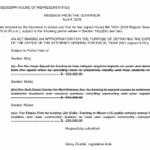
Three projects totaling about $1.5 million were denied funding following a partial veto by Governor Tate Reeves at the end of the legislative session. The veto affected proposals for Hope Squad, the Gulf Coast Center for Non-violence, and Finally First. An override attempt in April was unsuccessful, as only the House of Representatives approved the veto override, leaving it in place.
Governor Reeves explained that the veto was based on a lack of detailed analysis of the projects, stating he could not approve funding without understanding the purpose and qualifications of the entities involved.
Source: Original Article