Rep. Bennie Thompson, D-Miss., wrote in a guest essay for Mississippi Today that a recent U.S. Supreme Court ruling he said gutted Section 2 of the Voting Rights Act has opened the door to late-decade racial gerrymandering and a plan to erase Mississippi’s only majority-Black congressional district.
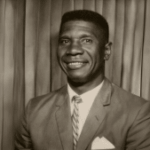
Thompson invoked the 1963 assassination of NAACP field secretary Medgar Evers in Jackson, saying the ruling “spits in the face” of Evers and others who risked their lives for voting rights. He wrote that Evers returned home wearing a T-shirt that read “Jim Crow Must Go” before he was killed, calling that history a reminder of Mississippi’s long struggle over Black political power.
Thompson argued the Voting Rights Act consolidated communities of interest and enabled the South to elect Black lawmakers after 1965, and he blamed the Supreme Court decision for allowing Southern states to redraw maps in ways that dilute Black voting power. Those characterizations were made by Thompson in the essay; the article did not cite a separate court opinion or ruling text.
Thompson singled out Gov. Tate Reeves and other Republican officials, saying they seized the ruling to push a congressional map that would eliminate the 2nd Congressional District, which Thompson represents. He wrote that the map would cost Black Mississippians their lone seat in Congress and quoted opponents’ efforts to remove him as an attempt to end what one supporter called his “reign of terror.” Thompson also wrote that state Auditor Shad White had posted a photo of an AR-15 with the caption “lock and load,” a detail Thompson included in the essay.
Thompson urged peaceful resistance and said Americans have confronted similar attacks before, quoting the late Rep. John Lewis that “democracy is not a state, it is an act.” Thompson has represented Mississippi’s 2nd District since 1993 and is the ranking member of the House Homeland Security Committee, the essay noted.
Jon Ross Myers is the executive editor and publisher of the Mississippi News Network, Mississippi's largest digital only media company. He can be reached at editor@tippahnews.com