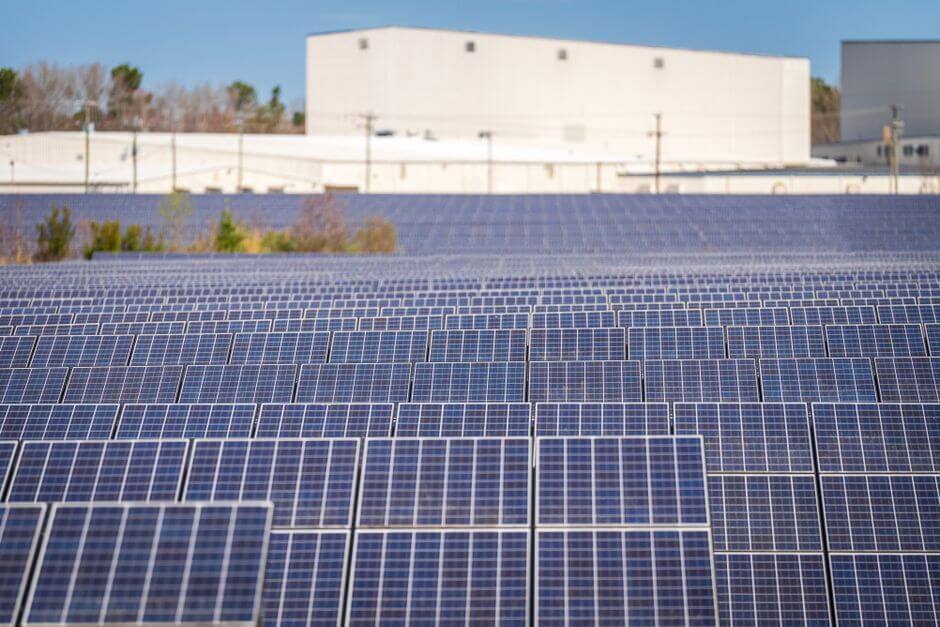
Solar power set new records in the United States in May, surpassing coal for the first time to become the leading source of new electricity capacity, according to data released Wednesday by energy think tank Ember. The Solar Energy Industries Association and analytics firm Wood Mackenzie also confirmed the trend, showing solar’s continued growth despite federal policies favoring coal.
Ember reported that solar supplied 12.8% of the nation’s electricity in May, while coal accounted for 12.2%, its fourth-lowest monthly share ever. Nicolas Fulghum, senior energy and data analyst at Ember, said solar has been steadily increasing in the U.S. electricity mix, while coal’s share has declined over the years. Solar also became the third-largest electricity source in the country, behind natural gas and nuclear.
Coal generation hit an all-time monthly low in April and only slightly rebounded in May, allowing solar to overtake it. Despite some fluctuations, Fulghum expects solar to surpass coal annually within a few years, noting that these milestones highlight solar’s durability amid reduced federal support. Wind and solar combined have previously overtaken coal, with wind power alone often outpacing coal during high-wind spring months.
While the federal government has taken steps to support coal, including President Donald Trump’s recent announcement to invest nearly $700 million in coal-fired plants and exports, the renewable sector continues to expand. The Solar Energy Industries Association and Wood Mackenzie said solar and battery storage made up 91% of new generating capacity in the first quarter, despite efforts to slow clean energy development and cancel projects. Critics argue that these policies hinder the growth of renewable energy just as demand for electricity rises due to artificial intelligence, manufacturing, and electrification of transportation and heating.
Globally, renewable energy is growing rapidly, with the International Energy Agency projecting renewables will produce nearly 45% of electricity worldwide by 2030. Meanwhile, U.S. states that supported Trump in the 2024 election account for 74% of new solar capacity installed in the first quarter of 2026, with states like Mississippi, Texas, and Florida among the top contributors. More than 6 million solar installations now exist nationwide across all sectors, from large utility arrays to residential rooftops, according to Environment America.
Jon Ross Myers is the executive editor and publisher of the Mississippi News Network, Mississippi's largest digital only media company. He can be reached at editor@tippahnews.com