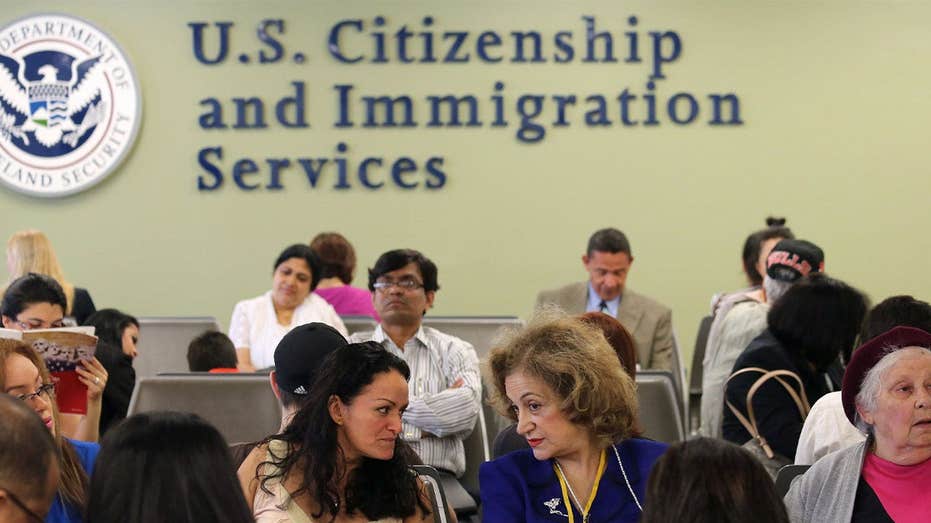
A former senior U.S. Citizenship and Immigration Services official and an accomplice were arrested Wednesday on federal charges alleging they accepted nearly $960,000 in exchange for manipulating and expediting immigration benefit applications, including citizenship cases, the U.S. Attorney’s Office for the Northern District of Texas said.
Prosecutors identified the defendants as Lukman Owolabi Ganiyu and Adeniyi Akeem Somoye and said they were charged with conspiracy to receive illegal gratuities by a public official. The arrests followed a multi‑year investigation, the U.S. attorney’s office said.
According to prosecutors, between December 2019 and March 2026 the pair bypassed standard USCIS procedures by pushing applicants who paid bribes directly to Ganiyu, skipping background checks, interviews and other routine reviews. Prosecutors allege Ganiyu altered USCIS systems to fast‑track applications and rerouted cases from field offices in Minneapolis, Charlotte and Houston so he could approve them himself.
Investigators recovered thousands of WhatsApp messages and hundreds of calls between Ganiyu, Somoye and numerous applicants, prosecutors said. The complaint alleges the defendants often exchanged money “back and forth” with applicants and that most of the citizenship applications involved people from African countries.
Court documents say Ganiyu received about $671,438 through Zelle and Cash App and $287,830 in cash deposits that prosecutors say were intended to conceal the source. The documents say Somoye processed roughly $1.7 million in transfers involving applicants and deposited about $449,010 in cash, keeping a portion of the payments.
Prosecutors said Ganiyu resigned from USCIS in March, citing “personal reasons,” several months before his arrest. “Selling immigration benefits for cash is a blatant abuse of public trust,” U.S. Attorney Ryan Raybould said in a statement. Each defendant faces up to five years in prison and a fine of up to $250,000, prosecutors said.
Jon Ross Myers is the executive editor and publisher of the Mississippi News Network, Mississippi's largest digital only media company. He can be reached at editor@tippahnews.com