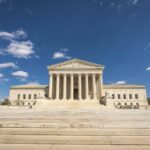
Supreme Court rules in favor of oil companies in Louisiana environmental lawsuits
The U.S. Supreme Court on Friday unanimously sided with oil and gas companies in a dispute over environmental lawsuits related to Louisiana’s coastal land loss. The decision allows the companies to have their cases heard in federal court instead of state court.
The case involves Chevron, which was ordered by a Louisiana jury to pay more than $740 million for damages to the state’s coastline. The companies argued that their activities during World War II, aimed at increasing aviation fuel supply for the U.S. government, should be considered under federal jurisdiction. The Supreme Court agreed, noting Congress has long permitted lawsuits against the government and its contractors to be heard federally, according to Justice Clarence Thomas, who authored the 8-0 opinion.
Louisiana’s coast has suffered significant erosion, losing more than 2,000 square miles over the past century, according to the U.S. Geological Survey. Oil and gas infrastructure has been identified as a major factor in land loss, which could worsen in the coming decades, the state’s coastal protection agency warned. The lawsuits stem from allegations that oil companies, including Texaco—acquired by Chevron in 2001—failed to restore wetlands damaged by their operations, such as dredging canals, drilling wells, and wastewater dumping.
The Supreme Court’s ruling overturned a 2024 decision by the U.S. Court of Appeals for the Fifth Circuit, which had allowed the lawsuit to proceed in state court. Chevron expressed satisfaction with the decision, stating that the claims relate to work conducted under federal supervision and should be litigated federally. The company denies responsibility for Louisiana’s land loss and contends that it should not be held liable for activities predating modern environmental regulations.
The case is part of a broader wave of lawsuits filed in 2013 against several oil giants, accusing them of violating Louisiana’s environmental laws over decades. Justice Samuel Alito recused himself from the case due to financial ties to ConocoPhillips. The Louisiana attorney general’s office and local officials criticized the Supreme Court’s decision as a delay tactic, emphasizing the ongoing dispute over environmental responsibility in the region.
Source: Original Article